
Portfolio | EF Corporate Learning

Closing the global English skills gap: Lessons for business leaders

Based on data from 2.2 million adults across 123 countries, this year’s index measures all four language skills – reading, listening, speaking, and writing – for the first time. The results reveal that English proficiency is far from even. For multinational companies managing distributed workforces, they highlight where collaboration, communication, and efficiency may be at risk.Dr. Christopher McCormick, Chief Academic Officer at EF Corporate Learning, highlights this year’s findings on global...

Five strategies for embedding a culture of continuous learning

With operations spanning more than 20 countries, seamless tubes manufacturing company Vallourec exemplifies the complexity of global talent management. Over 80% of employees are non-native English speakers, collaborating across Europe, North and South America, the Middle East, Asia and Africa. In an interview for our latest report, Véronique Junqua-Salanne, Global Talent Director at Vallourec, emphasizes the importance of building a culture of continuous learning, and shares practical tips for H...

Solving the personalization challenge in corporate language learning

Education research has long shown the effectiveness of personalized learning. Bloom’s 2 Sigma Problem demonstrated that students receiving one-to-one tutoring performed significantly better than those in conventional classrooms. The challenge, however, was that this approach was considered too costly to scale. HR and L&D leaders face the same dilemma in corporate language training. Although there is broad consensus that personalized approaches deliver the strongest results, few organizations are...

A first look at the future of AI-powered language learning

One-on-one learning opportunities, personalization, and adaptability are the most important features in a language program for HR and L&D leaders. Yet for many global organizations, delivering this level of individualization at scale remains a challenge.

For this reason, we are excited to invite you to a live demo and discussion designed for HR and L&D leaders who are exploring the future of personalized language learning.

How HR leaders can build future-proof skills in their workforce

Artificial intelligence and digitalization are reducing the shelf life of technical skills, creating what some thought leaders call “skill flux.” As Rodrigo Souto, Human Resources Director at IBM Brazil, explains in an interview for our latest report, “the lifespan of a skill is getting shorter and shorter. So people increasingly have to keep up, to continuously improve, to learn, to seek out new ways of learning.” This pressure is perhaps most visible in the technology sector, where roles are t...

Introducing Addi, our AI Learning Assistant

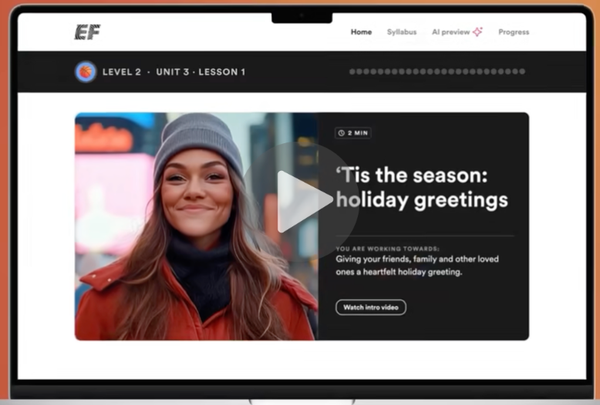
What if you could offer truly personalized 1:1 language learning to every employee, everywhere in the world? For decades, that gold-standard level of learning was impossible to scale - but that is about to change.

Introducing Addi, our AI-powered learning assistant purpose-built to teach languages. Drawing on decades of expertise and insights from millions of classroom interactions, Addi delivers personalized guidance, tailored corrections and real-time support.

From pitch to boardroom: How communication unlocks talent and ideas at every level

How many promising ideas in organizations never make it past the meeting room? How often is talent overlooked because employees struggle to express themselves with confidence in English?For HR and L&D leaders, these questions are becoming increasingly urgent as workforces globalize, and future talent pipelines evolve. EF’s English Proficiency Index shows that proficiency among 18–20-year-olds has been declining steadily since 2016, raising concerns about the readiness of future graduates to succ...

Sector-specific or globally consistent? Rethinking how we design language training for impact

When it comes to language training, should businesses prioritize content tailored to their industry, or aim for consistency across global teams? In my experience, the most effective programs strike a balance – combining targeted relevance with scalable design.

Over the years, I’ve had the opportunity to work with organizations across diverse industries, from aviation, construction, and finance to healthcare and pharmaceuticals. What I’ve consistently seen is that language learning has the greatest impact when it reflects the realities of a person’s working environment. Whether that’s describing a new treatment, navigating safety procedures, or handling customer interactions, real-world relevance builds confidence and accelerates results.

The Strategic Role of Language Training Across Industries

How are industry pressures reshaping learning and development priorities? What makes a language program successful in today’s global workplace?

Organizations across different sectors are grappling with many of the same workforce pressures, from skills shortages to digital transformation, and are increasingly turning to language training as part of their response. While operational realities may differ, the most effective strategies for designing, delivering, and scaling learning initiatives are proving transferable across industries.

Preparing for global growth through language training

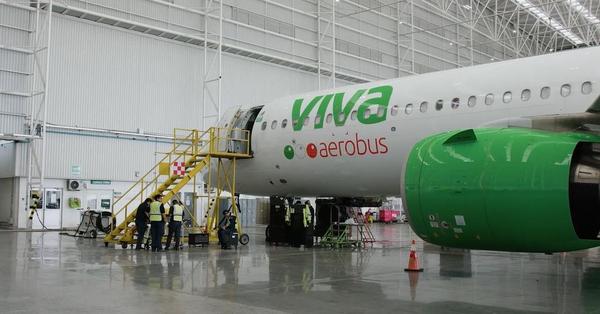
As one of Mexico’s fastest-growing airlines, with ambitious plans to double in size over the next five years, English proficiency is a key part of Viva’s growth strategy. Viva recognized that upcoming events like the FIFA World Cup would bring a wave of international travelers, particularly from the United States. This created an urgent need to strengthen English communication across its workforce, especially among those directly interacting with passengers. The company also saw language trainin...

What will be the biggest challenges for L&D leaders over the next 5 years?

At our 2025 Global Summit, HR and L&D professionals shared their perspectives on the critical themes shaping the future of learning – from how to lead through uncertainty, to ensuring equitable access to development, and demonstrating meaningful impact. Their insights reflect not only the complexity of the moment, but the opportunity for L&D to play a more strategic and influential role in shaping what comes next.

At our 2025 Global Summit, HR and L&D professionals shared their perspectives on...

Widening Access to Language Training

Amazon’s decision to remove the waiting period for English language training in its Career Choice program reflects a powerful insight: investing in people from day one accelerates not just learning, but long-term impact. Through its ongoing partnership with EF Corporate Learning, Amazon now enables new hires to begin their English studies from their first day on the job. This change demonstrates a shift in perspective, positioning language proficiency as a core skill necessary for workplace succ...

Building a skills-first, inclusive future through language

Randstad, the world’s leading talent company, partnered with EF Corporate Learning to create a globally consistent and equitable English language training program for employees across 39 markets. Aligned with their Employee Value Proposition (EVP) and ambition to become a skills-first organization, the initiative empowers employees with the communication skills needed for career growth, internal mobility, and leadership develo...

AI and Internal Communication: Insights from Industry Leaders

As artificial intelligence continues to shape how global teams communicate, one area stands out for its impact and its variability: internal communication. For multinational companies, getting internal messaging right is critical for operational clarity, culture, and collaboration. Despite this, recent findings from our EdTech Review, which surveyed HR and L&D leaders in multinational organizations, show that AI’s influence on internal communication varies significantly by industry. Three key s...

Fluency for All: Scaling Speaking Practice for the Real World

The biggest barrier to achieving fluency when learning a language isn’t access to learning content. It’s the lack of regular, meaningful speaking practice.

Language learners everywhere, whether they’re students in a classroom or professionals in a global company, are too often limited to passive exposure and memorization. They may understand the language, but don’t use it often enough to become fluent.
Load More

Portfolio | Other projects